Dhanteras Puja 2026 at Home: Complete Samagri List and Step-by-Step Vidhi
A complete guide to performing Dhanteras 2026 puja at home: detailed samagri checklist, step-by-step vidhi, thali setup, and Yam Deepam instructions.


Featured Master Editorial: Dhanteras 2026 Puja at Home complete samagri list, vidhi and Yam Deepam guide
In This Curated Guide
Dhanteras is one of the most spiritually meaningful and joyous days of the Diwali celebration. Homes are thoroughly cleaned, doorways are adorned with fresh marigold torans and colorful rangolis, sacred diyas are prepared, and families gather together to offer prayers for good health, peace, longevity, and prosperity.
While modern festivities often highlight shopping for gold, silver, or kitchen utensils, the true heart of Dhanteras lies in its evening worship. The festival is dedicated to Lord Dhanvantari (the divine physician of the Gods and father of Ayurveda), Goddess Lakshmi (the embodiment of prosperity and auspiciousness), and Lord Kubera (the celestial treasurer and guardian of wealth).
If you are planning to perform Dhanteras puja at home in 2026, you might be wondering: What are the essential puja items needed? How should the puja thali be arranged? What is the correct way to perform Kalash Sthapana? And why is Yam Deepam lit facing South?
This comprehensive guide provides an authentic, practical, and step-by-step roadmap for your Dhanteras 2026 home rituals. You will find a full samagri checklist divided into easy categories, a simple 7-step puja vidhi, an in-depth Yam Deepam manual, and fire safety tips. You can adapt these rituals to your family's regional traditions with devotion and peace of mind. (If you are also shopping for auspicious items or creating festive family portraits, check out our companion guides on What to Buy & Avoid on Dhanteras 2026, Dhanteras AI Photo Editing Prompts, and our trending guides for Diwali Couple AI Photo Prompts and Diwali Kids Photo Prompts).
Significance of Dhanteras Puja: Lord Dhanvantari, Goddess Lakshmi & Kubera
Dhanteras, traditionally known as Dhantrayodashi, falls on the thirteenth lunar day (Trayodashi) of Krishna Paksha in the sacred Hindu month of Kartik. It heralds the five-day Deepavali celebration across India. The word Dhanteras is derived from two roots: Dhan (wealth) and Teras (thirteenth day). However, Hindu philosophy recognizes that true wealth encompasses much more than gold and coins—it begins with physical health, mental serenity, and domestic harmony.
1. Lord Dhanvantari – The Divine Healer
According to the ancient Puranas, during the cosmic churning of the cosmic ocean (Samudra Manthan), Lord Dhanvantari emerged on this exact Trayodashi day holding the golden pot of celestial nectar (Amrit Kalash) in one hand and sacred Ayurvedic healing herbs in the other. He is worshipped as an incarnation of Lord Vishnu and the cosmic physician. Worshipping Lord Dhanvantari brings freedom from chronic illnesses, grants longevity (Ayushya), and blesses the household with radiant physical and mental vitality.
2. Goddess Lakshmi – Auspicious Prosperity & Grace
Goddess Mahalakshmi is revered as the divine dispenser of spiritual and material abundance. On Dhanteras evening, households invite Her divine presence into clean, well-lit spaces. Her worship on this day focuses not on greedy accumulation, but on welcoming auspiciousness (Shubh), peace, and gratitude into the home.
3. Lord Kubera – The Celestial Guardian of Wealth
While Goddess Lakshmi creates and bestows prosperity, Lord Kubera is recognized as the eternal custodian and guardian of treasures. Worshipping Lord Kubera on Dhanteras invokes wisdom in financial management, safeguarding hard-earned earnings from wasteful expenditures and debt.
4. Lord Ganesha – The Lord of Auspicious Beginnings
No Vedic puja begins without first honoring Lord Ganesha (Pratham Pujya). As Vighnaharta (the remover of all obstacles), Lord Ganesha is invoked to eliminate hurdles, purify the ritual atmosphere, and bless the family with wisdom and discernment.
Complete Dhanteras Puja Samagri List: Categorised Checklist
Arranging your puja samagri early on the morning of Dhanteras ensures that your evening worship proceeds in a serene, devotional environment without last-minute supermarket rushes. Below is a comprehensive list organized by purpose:
Section A: Main Puja Essentials & Altar Setup
These foundational items form the core sanctum of your home mandir:
- Idols or framed photo of Goddess Lakshmi, Lord Ganesha, and Lord Dhanvantari (brass, clay, silver, or panchadhatu)
- A clean wooden chowki (bajot or low wooden stool) for placing the deities
- A fresh, unused piece of red or yellow cotton/silk cloth to cover the chowki
- A brass, copper, or silver Kalash (sacred pot)
- One fresh whole coconut with husk intact (nariyal) and a bunch of 5 or 7 fresh mango leaves (aam ke patte)
- Brass or clay diyas for the altar, plus a main Akhand or primary brass lamp
- Pure cow ghee or sesame oil for the puja diyas
- Clean cotton wicks (gol batti and lambi batti)
- Aromatic dhoop sticks, agarbatti (incense), and camphor (kapoor) for aarti
- Matchbox or lighter kept strictly for sacred use
Section B: Tilak, Roli, Akshat & Sacred Threads
Sacred powders and materials used for consecration and offering respects:
- Roli (Kumkum / pure vermilion powder)
- Turmeric powder (haldi) or freshly prepared turmeric paste
- Sandalwood paste (chandan) or chandan tablets
- Akshat: Clean, whole, unbroken white rice grains (khandit rice is strictly avoided in Vedic rituals)
- Mauli / Kalawa: Sacred red and yellow spun cotton thread for tying around the kalash and wrists
- Janeu (sacred cotton thread pair) to offer to Lord Ganesha
Section C: Offerings, Prasad & Seasonal Flowers
Pure natural offerings that delight the deities and fill the home with fragrance:
- Fresh seasonal flowers (especially bright orange/yellow marigolds and red hibiscus/roses)
- At least one fresh floral garland (mala) for the deities
- Fresh Tulsi leaves (sacred to Lord Dhanvantari and Vishnu; avoid plucking on Sundays or evenings)
- Durva grass (sacred three-blade green grass for Lord Ganesha)
- Kheel-Batasha (fresh puffed rice crisps and sugar drops, quintessential Diwali offerings)
- Traditional sweets: Besan ladoo, peda, motichoor ladoo, or homemade rice kheer
- Panchamrit: A small bowl containing a blend of milk, curd, ghee, honey, and raw sugar
- Fresh seasonal fruits: Bananas, apples, pomegranates, or water chestnuts (singhara)
- Paan leaves (betel leaves), whole supari (betel nuts), cloves (laung), and green cardamom (elaichi)
Section D: Special Dhanteras Ritual Items
Unique traditional items specific to the Dhantrayodashi celebration:
- Yam Deepam Diya: A large four-wick clay diya or lamp hand-sculpted from whole wheat dough (atta)
- Pure mustard oil (sarson ka tel) specifically for the Yam Deepam diya
- Newly bought items: Your new gold or silver coin, jewellery, or new brass utensil to receive blessings
- Whole coriander seeds (sabut dhaniya): A small brass bowl filled with clean dry coriander seeds
- Gomti Chakra (3 or 5 pieces) and yellow Cowrie shells (peeli kodi) if followed in your family tradition
- Gangajal (holy water from the sacred Ganges) or clean filtered water in an achamana cup
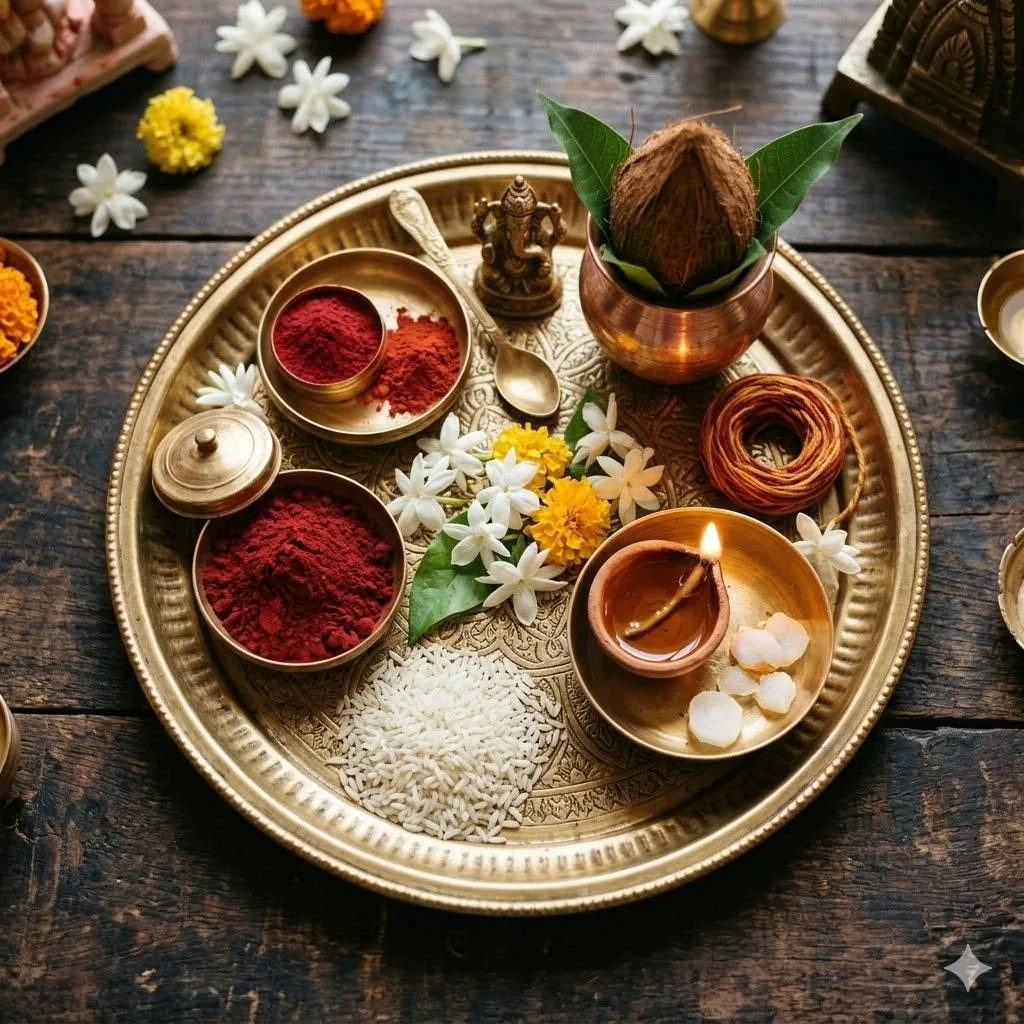
📷 Comprehensive Dhanteras puja samagri checklist arranged neatly on traditional brassware before evening prayers
How to Prepare the Dhanteras Puja Thali
A thoughtfully decorated puja thali not only elevates the visual beauty of your home mandir, but it also allows the worshipper to perform the rituals fluidly without searching for individual ingredients. A clean brass, copper, bronze, or silver thali is ideal for this occasion.
Step 1: Clean and Mark the Thali
Wash and thoroughly dry your metal thali until it gleams. Using your right ring finger, apply a small drop of water with roli or chandan paste to draw an auspicious Swastika in the center of the thali. Place a tiny pinch of akshat (unbroken rice) at its center.
Step 2: Position the Tilak Powders
Arrange three small brass bowls or neat mounds around the upper rim containing pure Kumkum (Roli), Sandalwood paste (Chandan), and Turmeric (Haldi). Keep a separate small bowl filled with clean white Akshat.
Step 3: Central Ghee Diya & Sacred Coin
Place a small clay or brass ghee diya in the center-right of the thali. Beside the diya, place your newly purchased silver coin, gold coin, or traditional rupee coin on a bed of coriander seeds or whole rice.
Step 4: Mukhvas & Floral Accents
Place two fresh betel leaves (paan ke patte) flat on the thali. On top of each leaf, place one whole supari (betel nut), two cloves (laung), and two green cardamoms (elaichi). Tuck fresh marigold petals and a bunch of fragrant dhoop sticks around the remaining perimeter.
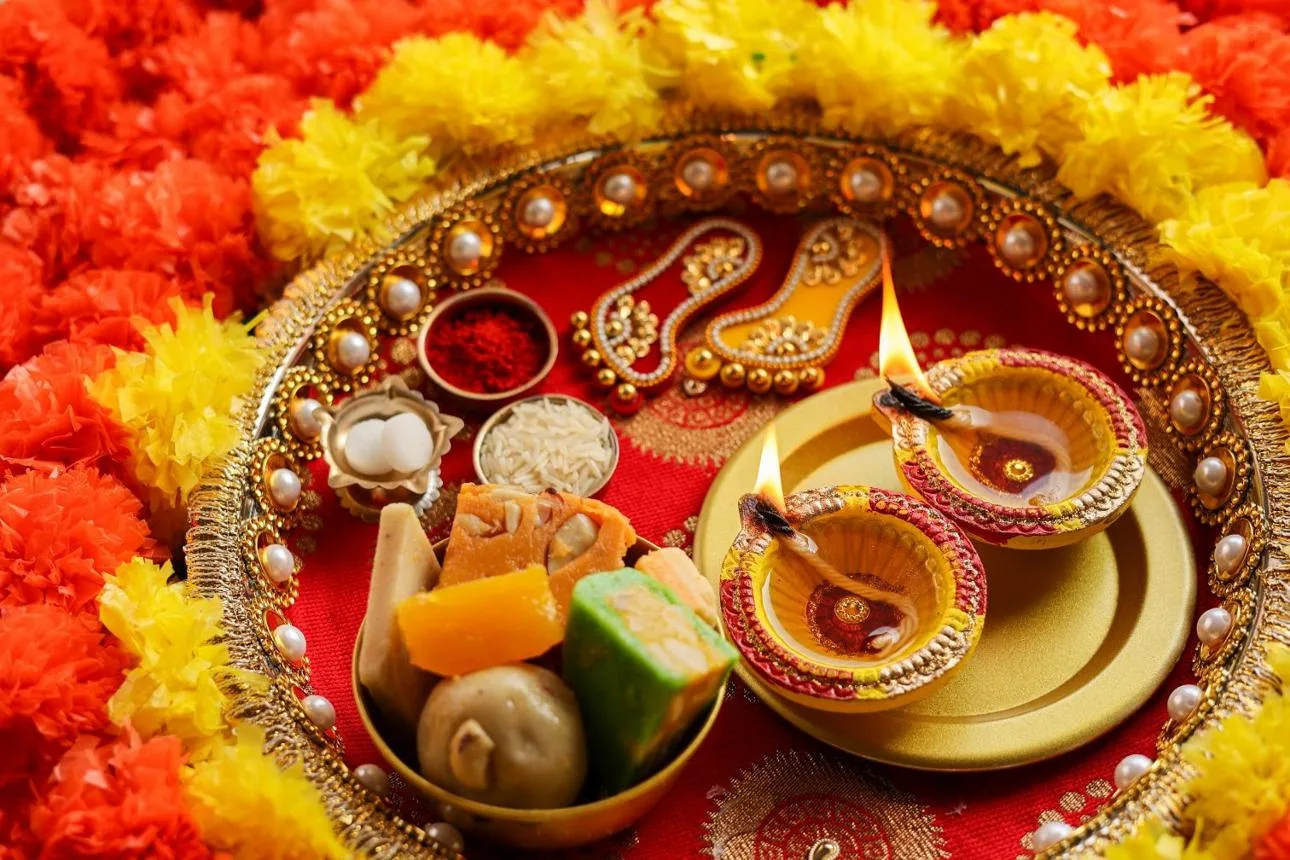
📷 An auspiciously decorated brass Dhanteras puja thali featuring a central ghee lamp, sacred coin, kumkum swastika, and prasad
Setting Up the Puja Space at Home: Chowki & Kalash Sthapana
Creating an elevated, pure sanctuary within your home invites peace and spiritual energy into every corner of the dwelling. Follow these traditional recommendations:
1. Cleaning and Directional Orientation
Clean your entire home, paying particular attention to the front entrance and the north-east corner (Ishanya Kon). Set up your puja altar so that the deities face West or South, allowing the worshipper to face East or North during prayers, which promotes focus, tranquility, and positive vibrational flow.
2. Setting Up the Chowki (Altar Platform)
Wipe down a sturdy wooden stool or chowki. Spread a clean, unstitched red or yellow cloth over it. Red represents divine feminine energy (Shakti) and Goddess Lakshmi, while yellow honors Lord Dhanvantari and Lord Vishnu. Sprinkle a few drops of Gangajal to sanctify the space.
3. Consecrating the Kalash (Kalash Sthapana Vidhi)
The Kalash represents the cosmic reservoir of life, creation, and divine nectar: • Take a brass, copper, or earthen pot and fill it 3/4th with clean water and a splash of Gangajal. • Drop one clean silver/brass coin, one whole supari, a pinch of haldi, and unbroken rice grains inside. • Tie sacred Mauli (red thread) around the neck of the kalash. • Place 5 or 7 fresh mango leaves inside the rim pointing upwards. • Take a fresh coconut with its fibrous husk intact, wrap it with red cloth or kalawa, and gently seat it securely on top of the mango leaves.
4. Placing the Deities & New Purchases
Gently place the idols of Lord Ganesha to the left of Goddess Lakshmi (from the worshipper's perspective, Ganesha sits on the right). Place the picture or idol of Lord Dhanvantari centrally or beside Lakshmi. Clean your newly bought utensils, coins, or jewellery and place them respectfully on a clean plate right at the feet of the deities to receive their blessings.
Simple Step-by-Step Dhanteras Puja Vidhi at Home
You do not need to memorize complex Sanskrit chants to conduct a deeply resonant Dhanteras puja. When performed with a pure heart, calm mind, and sincere devotion, simple Vedic procedures bring immense blessings to the household. Follow these 7 steps in sequence:
Step 1: Self-Purification (Atma-Shuddhi & Achamana)
Bathe and wear clean, traditional festive clothes. Sit comfortably on an asana (mat) facing East. Take a small spoonful of water in your right palm from the achamana vessel, sip it, and recite: 'Om Keshawaya Namah, Om Madhavaya Namah, Om Narayanaya Namah'. Wash your hands with water and sprinkle a few drops over your head to purify body and mind. Light the main ghee lamp on your altar.
Step 2: Invocation of Lord Ganesha (Vighnaharta Puja)
Take a pinch of akshat and red flowers in your folded hands. Recite the Ganesha Dhyana Mantra: 'Vakratunda Mahakaya Surya Koti Samaprabha, Nirvighnam Kuru Me Deva Sarva Karyeshu Sarvada'. Offer the flowers and rice at Lord Ganesha's feet. Apply a tilak of chandan and sindoor, and offer fresh Durva grass, which is dearest to Him.
Step 3: Lord Dhanvantari Puja for Health & Well-being
Turn your attention to Lord Dhanvantari. Offer yellow marigold flowers, a pinch of turmeric, and fresh Tulsi leaves. Meditate on His divine healing form with this simple prayer: 'Om Namo Bhagavate Vasudevaya Dhanvantaraye Amrita-Kalasha Hastaya Sarvamaya Vinashanaya Trailokya Nathaya Shri Maha-Vishnave Namaha'. Pray sincerely for the health, vitality, and freedom from ailments for all family members.
Step 4: Worshipping Goddess Lakshmi & Lord Kubera
Offer fragrant red flowers, kumkum, and unbroken akshat to Goddess Lakshmi. Light dhoop sticks to fill the sanctum with sweet incense. Chant the Lakshmi Beej or basic stotra: 'Om Shreem Hreem Shreem Kamale Kamalalaye Praseeda Praseeda Shreem Hreem Shreem Om Mahalakshmaye Namaha'. Next, fold hands before Lord Kubera and chant: 'Om Kuberaya Namaha', asking for righteous earnings, wisdom, and protection of wealth.
Step 5: Consecration of Newly Bought Items
Take the new gold/silver coins, brass vessels, or jewellery you bought for Dhanteras. Apply a gentle tilak of roli and akshat on each item. Offer a flower petal and sprinkle a few drops of holy water, praying that these material assets serve the family with righteousness, utility, and welfare throughout the coming year.
Step 6: Offering Prasad (Naivedyam) & Aarti
Offer the plate of Kheel-Batasha, sweets (ladoos, peda, or kheer), and seasonal fruits before the altar. Circle your water spoon around the prasad plate three times as an offering of devotion. Stand together with your family and perform the traditional Lakshmi Mata Aarti ('Om Jai Lakshmi Mata') and Ganesha Aarti ('Jai Ganesh Jai Ganesh Deva') using a brass lamp with lit camphor.
Step 7: Lighting Evening Diyas Across the House
After concluding the altar aarti, take small oil or ghee diyas from the sacred flame and place them systematically at your home entrance, balconies, windowsills, kitchen, and near holy tulsi plants to welcome light into every corner.
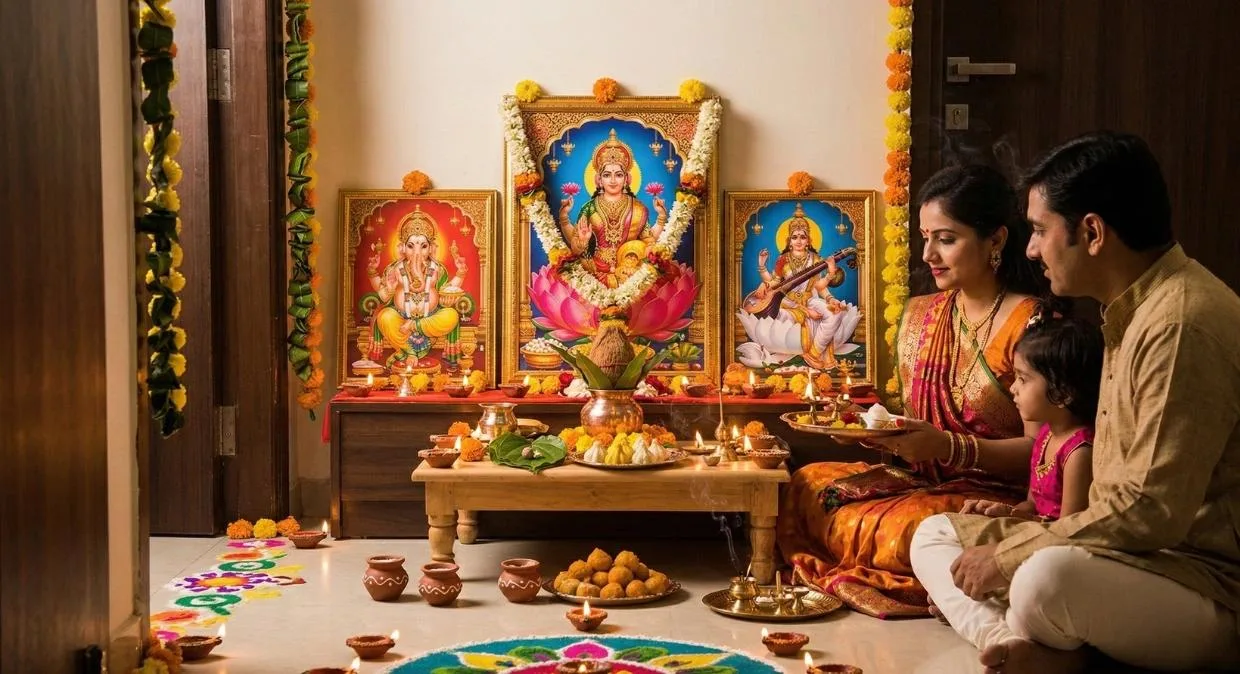
📷 A serene and devotional home puja chowki setup illuminated with brass oil lamps, fresh garlands, and consecrated offerings
Yam Deepam: Significance, Placement and Safe Lighting Guide
While the main home puja centers on prosperity and health, Dhanteras evening holds a deeply poignant, ancient ritual known as Yam Deepam (also spelled Yama Deepa). Mentioned in the Skanda Purana and Padma Purana, it is the only night of the year when a dedicated lamp is offered directly to Lord Yama, the lord of death, justice, and righteousness.
1. The Spiritual Legend & Purpose
Ancient tradition recounts the story of King Hima's sixteen-year-old son, who was prophesied to die of a snakebite on the fourth day of his marriage. His clever young bride illuminated the entire palace with hundreds of earthen lamps, laid out her gold and silver ornaments at the threshold, and kept her husband awake with inspiring songs and stories. When Lord Yama arrived disguised as a venomous serpent, the blinding brilliance of the lamps dazzled His eyes. He sat listening to the sacred hymns all night, and at dawn, the fatal hour passed safely, sparing the prince's life. Ever since, lighting the Yam Deepam on Dhanteras evening is performed as a heartfelt prayer to protect every family member against untimely death (Apmrityu Haranam), accidents, and lingering sickness.
2. The Four-Sided Diya (Choumukhi Diya)
Unlike ordinary single-wick puja lamps, Yam Deepam requires a large four-wick lamp (choumukhi diya). It can be made of unbaked clay or hand-molded from kneaded whole wheat flour (atta). Four cotton wicks are placed inside, extending toward the four cardinal points, and filled generously with pure mustard oil (sarson ka tel) or sesame oil.
3. Correct Placement: Facing South
The Yam Deepam lamp is never placed inside the puja room or living space. It is placed strictly outside the main entrance of the house, by the threshold, or in the open courtyard. • Place a small handful of unbroken raw rice or wheat grains on the ground. • Gently place the filled diya upon this grain bed. • Position the main flame facing South (the cardinal direction ruled by Lord Yama). • Light all four wicks, offer a pinch of roli, a whole flower petal, and recite: 'Mrityuna Dhandapashabhyam Kalena Shyamaya Saha, Trayodashyam Deepadanat Suryajah Priyatam Mama'.
4. Essential Fire Safety Protocols
Because the Yam Deepam is placed near the home threshold with multiple flames, follow strict safety measures: • Keep the diya on an elevated brick, non-combustible ceramic tile, or marble step away from ground drafts. • Ensure it is at least 3 feet clear of footwear racks, door curtains, plastic decorations, or dry leaves. • Never leave children or pets unattended near the exterior lamp.
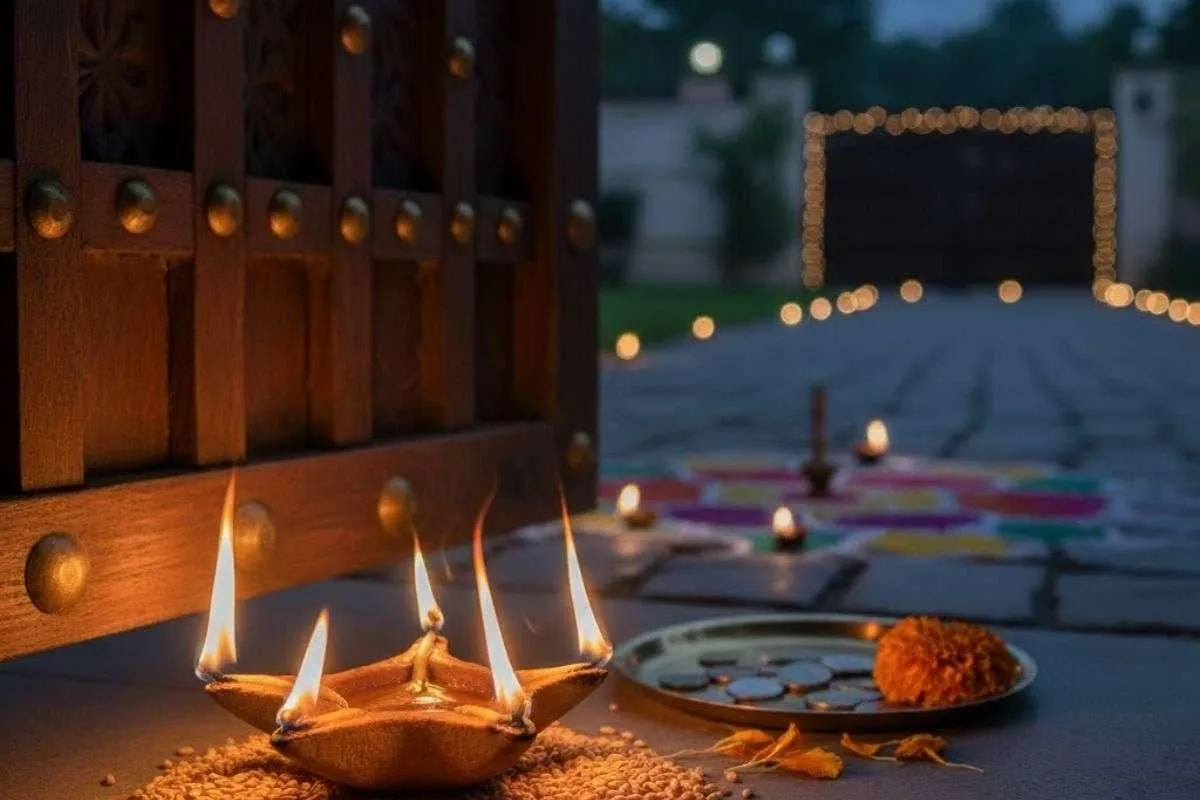
📷 Sacred four-wick Yam Deepam lit with pure mustard oil, placed on an auspicious grain bed outside the home facing south
Dhanteras 2026 Puja Timings & Muhurat Advisory
In 2026, Dhanteras falls on Friday, 6 November 2026. In Vedic astrology, the most auspicious window for Dhanteras puja occurs during Pradosh Kaal (the twilight period lasting roughly 2 hours and 24 minutes immediately following local sunset), particularly when it overlaps with Vrishabha Lagna (a fixed or Sthir ascendant). Performing puja during a Sthir Lagna symbolizes that divine prosperity, health, and peace will permanently reside in your dwelling.
Why You Must Check Your Local City Panchang
Sunset times and astronomical lagna transitions vary significantly across geographic longitudes and latitudes. For example, the sunset in Kolkata occurs much earlier than in Mumbai, Jaipur, or New Delhi; similarly, international devotees in London, New York, or Singapore operate under different solar twilight hours. Do not rely on a single nationwide television broadcast or generalized social media post for exact puja muhurat minutes. Always consult a localized astronomical calendar such as Drik Panchang for your specific city on Friday, 6 November 2026, to determine the exact sunset, Pradosh Kaal, and Vrishabha Lagna window.
How to Perform a Simple Puja with Minimal Items
Not everyone is in a position to assemble a five-tier brass altar, elaborate sweets, and dozens of specialty samagri items. College students in hostels, working bachelors living far from family, elderly couples, or households experiencing financial constraints can perform an equally powerful and sacred Dhanteras puja using minimal household items.
The Minimal Puja Essentials
If you have only the simplest resources, all you need is: • One clean earthen diya or candle • A cup of clean drinking water • A small pinch of raw rice grains and kumkum • One fresh flower or clean green leaf • A piece of jaggery (gud), sugar, or a fresh fruit for prasad
- Wipe a small clean corner of your desk, table, or shelf facing East.
- Place a picture of Goddess Lakshmi, Ganesha, or Lord Dhanvantari on your phone screen or a small printout.
- Light your single diya with sincere prayer in your heart.
- Offer a drop of water, a grain of rice, and your flower with devotion.
- Close your eyes for 5 minutes, mentally expressing gratitude for your health, breath, and life, and ask for peace and strength.
- Consume your piece of jaggery or fruit as blessed prasad.
Common Mistakes to Avoid During Dhanteras Puja
To preserve the sacredness of the occasion and ensure smooth household safety, keep these 6 common oversights in mind:
1. Placing the Yam Deepam Inside the Home
Yam Deepam is specifically offered to Lord Yama to ward off external negative energies and untimely demise. Traditional rules specify that it must be kept outside the threshold facing South, never inside the domestic mandir or bedrooms.
2. Using Broken or Chipped Rice (Khandit Akshat)
In Vedic rituals, 'Akshat' literally translates to 'unbroken'. Rice grains represent wholeness and cosmic completion. Inspect your rice beforehand and discard chipped or broken grains before consecrating the deities.
3. Leaving Newly Bought Utensils Completely Empty
If you bought a new brass, copper, or steel vessel for Dhanteras, avoid placing it before the altar completely empty. Place a handful of whole grains, raw sugar, sweets, or a small coin inside as a symbolic gesture of fullness and abundance.
4. Neglecting Lord Dhanvantari and Focusing Solely on Gold
Dhanteras has become heavily commercialized around jewellery sales. Remember that without good health and physical well-being, material wealth cannot be enjoyed. Always begin by offering heartfelt prayers to Lord Dhanvantari.
5. Unsafe Diya Placement Near Flammable Fabrics
Festive excitement should never compromise home safety. Keep open flame diyas away from floor-length curtains, plastic streamers, rangoli powder containing synthetic glitters, and low doorways where clothing can catch fire.
6. Allowing Stress or Irritation to Spoil the Atmosphere
Rushing through rituals with anger or tension counteracts the entire purpose of the festival. Goddess Lakshmi is described as residing where there is cleanliness, gentle speech, mutual respect, and quiet gratitude.
Deities Worshipped on Dhanteras: Divine Roles and Offerings
Dhanteras is uniquely multifaceted because it integrates deities of healing, abundance, intellect, and spiritual protection. Here is a clear overview of their respective significance:
| Deity | Divine Role & Significance | Primary Blessing Sought | Traditional Offering |
|---|---|---|---|
| Lord Dhanvantari | Cosmic Healer & Father of Ayurveda | Physical vitality, sound health & recovery | Tulsi leaves, yellow flowers, seasonal fruits & medicines |
| Goddess Lakshmi | Supreme Deity of Fortune & Grace | Auspiciousness, peace & sustainable wealth | Kheel-batasha, lotus/marigold, kheer & fresh peda |
| Lord Kubera | Celestial Treasurer & Asset Custodian | Financial wisdom, debt relief & asset safety | Consecrated coins, whole coriander seeds & akshat |
| Lord Ganesha | Vighnaharta & Lord of Wisdom | Removal of obstacles & intellectual clarity | Fresh Durva grass, modak, yellow ladoos & sindoor |
| Lord Yama | Dharmaraja & Lord of Time & Justice | Family longevity & protection against Apmrityu | Yam Deepam (4-wick mustard oil lamp facing South) |
10-Point Dhanteras 2026 Puja Preparation Checklist
Use this quick checklist on the morning of Friday, 6 November 2026, to ensure your puja space and ritual items are organized well before Pradosh Kaal twilight:
Frequently Asked Questions
When is Dhanteras puja performed in 2026?
Dhanteras falls on Friday, 6 November 2026. The puja is traditionally performed in the evening during Pradosh Kaal (the twilight period following sunset), especially when Vrishabha Lagna prevails. Because sunset and lagna timings vary from city to city, always verify exact local muhurat timings using a trusted Panchang such as Drik Panchang.
Who should be worshipped first during Dhanteras puja?
As in all Vedic rituals, Lord Ganesha is invoked and worshipped first as Vighnaharta (the remover of obstacles). After Ganesha, prayers are offered to Lord Dhanvantari for health and healing, followed by Goddess Lakshmi and Lord Kubera for prosperity, peace, and financial stability.
What is Yam Deepam and why does it face south?
Yam Deepam is an evening ritual where a four-wick lamp (choumukhi diya) filled with mustard oil is lit outside the main entrance of the house. It is placed facing south—the direction traditionally associated with Lord Yama, the god of death and justice—as a prayer for the longevity, health, and protection of family members against untimely death (apmrityu).
Can I perform Dhanteras puja if I did not buy gold or silver?
Absolutely. Buying precious metals is a cultural custom, not a religious requirement for puja. You can perform a deeply auspicious Dhanteras puja using brass or clay utensils, fresh flowers, whole coriander seeds, clean water, and heartfelt prayer. Divine grace is attracted by genuine devotion (bhakti), not monetary expense.
What is the difference between Dhanteras puja and Diwali Lakshmi puja?
Dhanteras puja is centered on Lord Dhanvantari (health and healing) alongside Goddess Lakshmi and Lord Kubera, marking the arrival of auspicious beginnings and honoring Yam Deepam. Diwali Lakshmi puja occurs two days later on Amavasya, focusing extensively on Mahalakshmi and Lord Ganesha as the supreme festival of light and spiritual wealth.
Which direction should the Dhanteras puja chowki face?
The puja platform or altar should ideally be placed in the North, East, or North-East (Ishanya) corner of the room. While performing the rituals, family members should face East or North for optimal peace and spiritual focus.
What kind of oil and wicks are used for Yam Deepam?
Traditionally, pure mustard oil (sarson ka tel) or sesame oil (til ka tel) is used for Yam Deepam. A large clay diya or a lamp sculpted from kneaded whole wheat dough (atta) is fitted with four raw cotton wicks pointing in the four cardinal directions.
Can women light the Yam Deepam diya?
Yes. In many families, the eldest woman or mother of the household lights the Yam Deepam, while in others, the eldest male or family head performs it. Any responsible adult in the family can respectfully light the lamp and place it outside.
What should be placed inside the Dhanteras Kalash?
Fill the brass or copper kalash with clean water and a few drops of Gangajal. Place a supari (betel nut), a clean coin, a pinch of turmeric powder, whole rice grains (akshat), and a sacred flower inside. Arrange five or seven fresh mango leaves around the rim and place a coconut wrapped in a red cloth or kalawa on top.
What should we do with the whole coriander seeds (sabut dhaniya) after the puja?
After Dhanteras and Diwali rituals are concluded, keep a small portion of the blessed coriander seeds in your cash box, safe, or kitchen grain container to symbolize ongoing abundance. You can also sow a handful of the seeds in a clean flower pot in your balcony or garden; their green sprouting symbolizes growth and prosperity.
Final Thoughts
Dhanteras is an extraordinary festival because it bridges the ancient Vedic reverence for physical vitality with the natural human wish for a joyful, secure, and prosperous home.
As you clean your living spaces, prepare your puja thali, arrange the golden kalash, and step outside into the cool November twilight to light the sacred Yam Deepam, remember that the purest offering you bring to the altar is your own peace of mind, integrity, and warmth toward family and neighbors.
Whether your celebration includes fine gold coins or a simple earthen diya, may Lord Dhanvantari bless your family with radiant health, may Goddess Lakshmi fill your dwelling with enduring harmony, and may Lord Kubera grant you the wisdom to preserve and share your blessings. Wishing you and your loved ones a truly peaceful, healthy, and luminous Dhanteras 2026!
Written by Harish Kumar
Harish Kumar has analyzed thousands of generative prompts across Google Gemini, Bing Image Creator, and Nano Banana, specializing in Indian traditional festivals, face consistency, and photorealistic portraiture.
Reader Discussion & Output Feedback
0 CommentsNo comments yet. Be the first to share your prompt output results!